What Came West, Josh Weil’s second novel, recounts the life of a troubled, neurodivergent man who flees from civilization in Ohio. After some grueling adventures, the protagonist, Silas, makes it to California and settles into the Sierra Nevada Foothills several years before the gold rush. Once there, he knows a kind of peace that had eluded him. He exists in solitude and migrates with the seasons, nearby but never with the Nisenan and Mountain Maidu, all within the Yuba River Watershed. When his new world is shattered by throngs of gold-seekers, Silas fights back. With gorgeous prose and breath-taking suspense, Weil offers us a glimpse into a world forever eradicated by colonialism and greed. All this while capturing the lure and excitement the Gold Rush had to offer to all those who came, sacrificed, and often died. Impeccably researched and crafted—and although not an easy read—What Came West allows us unique perspectives and a deeper understanding of conflict, change, and love.
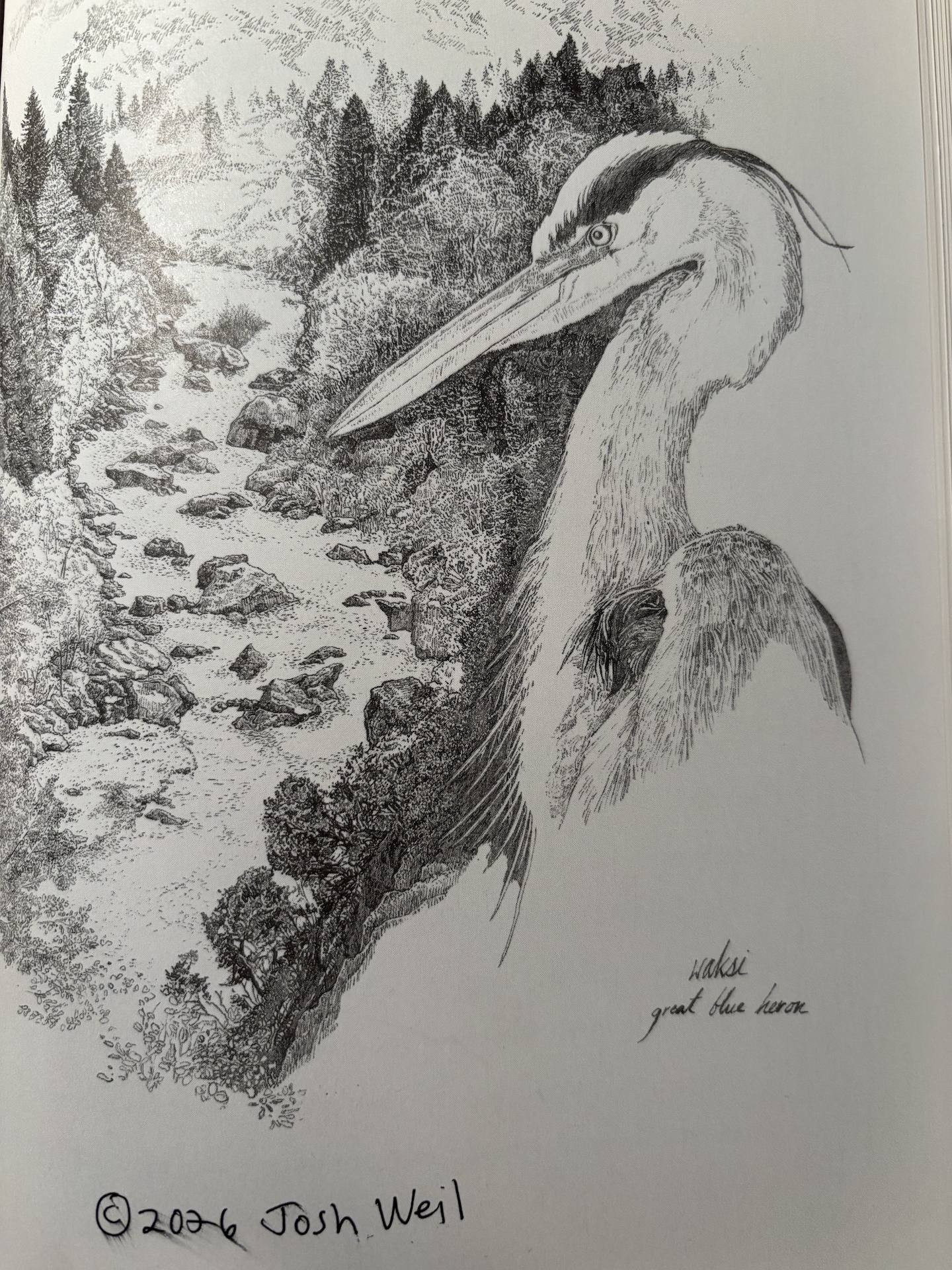
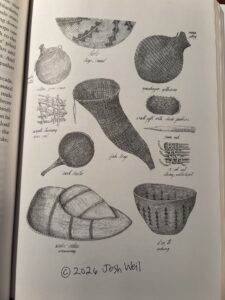
Also a visual artist, Weil includes eleven drawings in the novel, crafted with 19th century style ink and pen as Silas would have used. One is the featured photo, a Great White Heron in the Yuba River Watershed. Below, a collection of native baskets that Silas was likely to have traded with the Nisenan and Mountain Maidu.
To watch or listen to my interview with Josh Weil on the podcast, go to Podcasts, above, and then either click to go over to You Tube, or scroll down to Episode 33.